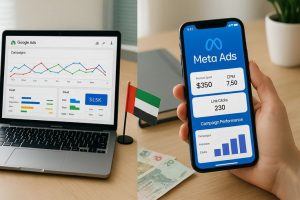
💡 Meta Ads vs Google Ads — Which Is Better for Your Business in 2025?
Digital advertising has become the heartbeat of modern marketing. Whether you’re running a startup, a small business, or a global brand, the question is no longer “Should I advertise online?” but “Where should I advertise?”
Two giants dominate this digital battlefield — Meta Ads (formerly Facebook Ads) and Google Ads. Both are powerful, both reach billions of users, and both can turn clicks into customers.
But here’s the real question: Which one is right for your business?
Let’s dive deep into the world of Meta Ads vs Google Ads — understand how they work, what makes them different, and how you can use both smartly for maximum growth.
🌐 What Are Meta Ads?
Meta Ads are advertisements run on platforms owned by Meta, including Facebook, Instagram, Messenger, and Audience Network.
These ads appear in people’s feeds, stories, reels, and even within chat apps. Meta Ads are all about connection and discovery — reaching people where they spend most of their social time.
🔹 How Meta Ads Work
Meta Ads operate on a social targeting model, meaning they show ads to people based on their interests, behavior, demographics, and activities — not just what they search for.
For example:
-
If someone likes fitness pages, follows gym influencers, and shops for health products online, Meta may show them your “Online Fitness Coaching” ad — even if they didn’t search for it.
🔹 Meta Ads Platforms
-
Facebook Ads – Great for awareness and community-driven marketing.
-
Instagram Ads – Perfect for visual storytelling and brand aesthetics.
-
Messenger Ads – Good for direct engagement and chat-based marketing.
-
Audience Network – Reaches people outside Facebook, across partnered apps.
💡 Why Businesses Love Meta Ads
-
Deep audience insights
-
Affordable for startups and small businesses
-
Visually engaging formats (videos, carousels, stories)
-
Strong retargeting features
-
Easy integration with Facebook Pixel for tracking conversions
In short:
Meta Ads help you build emotional connections, brand awareness, and social engagement.
🔍 What Are Google Ads?
Google Ads (formerly Google AdWords) is the world’s largest intent-based advertising platform, where businesses show ads to people actively searching for specific products or services.
When someone searches for “best running shoes” or “digital marketing agency near me,” Google Ads can display your website at the top of search results — even before organic SEO results.
🔹 How Google Ads Work
Google Ads runs on a pay-per-click (PPC) model, meaning you pay only when someone clicks your ad.
It uses keywords, bids, and Quality Score to decide when and where your ad appears.
🔹 Google Ads Platforms
-
Search Ads – Appear on Google search results.
-
Display Ads – Show image banners on websites across Google’s Display Network.
-
YouTube Ads – Video ads before or during YouTube videos.
-
Shopping Ads – Product listings with prices and images.
-
App Campaigns – Promote mobile apps across Google Play and YouTube.
💡 Why Businesses Love Google Ads
-
Reaches people with real buying intent
-
Instant visibility in search results
-
Highly measurable and data-driven
-
Works for both small and large budgets
-
Integrates with Google Analytics for deep insights
In short:
Google Ads help you capture ready-to-buy customers exactly when they’re searching.
⚖️ Meta Ads vs Google Ads — Key Differences
Both Meta and Google are powerful advertising ecosystems, but they serve different purposes.
Let’s compare them side by side 👇
| Aspect | Meta Ads | Google Ads |
|---|---|---|
| Primary Focus | Social engagement and brand awareness | Search intent and lead generation |
| Platform Type | Social media-based | Search engine-based |
| Audience Type | People discovering new things | People actively searching for solutions |
| Ad Formats | Image, video, carousel, story, reel | Text, display, video, shopping, app |
| Targeting | Interests, behaviors, demographics | Keywords, location, search intent |
| Best For | Brand awareness, community building | Direct sales, conversions, website traffic |
| Cost Model | CPC, CPM, or CPA | Mostly CPC or CPA |
| Analytics Tools | Meta Business Suite, Facebook Pixel | Google Ads Dashboard, Google Analytics |
| Reach | Over 3.8 billion monthly users | Over 8.5 billion daily searches |
| Example | Showing your fashion brand on Instagram stories | Showing your eCommerce site on Google search |
🎯 Which Platform Gives Better ROI?
The answer depends on your goal.
🔹 If your goal is brand awareness:
Meta Ads win. They’re visually appealing, cheaper per impression, and great for storytelling.
🔹 If your goal is direct sales or leads:
Google Ads win. People on Google are already searching with purchase intent.
🔹 If your goal is retargeting:
Both are powerful.
You can use Meta Pixel and Google Remarketing Tags together to re-engage users who visited your website but didn’t convert.
A smart strategy often involves using both platforms together for the best results.
💬 Real-World Example: Combining Meta & Google Ads
Let’s say you run an online clothing store.
-
You start with Meta Ads to showcase new designs, run influencer-style campaigns, and grow brand awareness.
-
Then, you use Google Ads to capture searchers looking for “buy trendy summer dresses online.”
-
Later, you retarget people who saw your Instagram ad but didn’t buy, using Google Display Ads.
This way, Meta creates interest, and Google captures intent — working hand-in-hand to maximize conversions.
📊 Cost Comparison: Meta Ads vs Google Ads
| Factor | Meta Ads | Google Ads |
|---|---|---|
| Average CPC (Cost Per Click) | ₹3 – ₹15 (India) | ₹10 – ₹50 (India) |
| Average CPM (Cost Per 1,000 Impressions) | ₹50 – ₹200 | ₹200 – ₹500 |
| Average Conversion Rate | 1–3% | 3–7% |
| Budget Flexibility | Very high (can start from ₹100/day) | High (recommended ₹500/day+) |
| Competition Level | Moderate | High for popular keywords |
👉 Verdict:
-
Meta Ads = cheaper awareness and engagement.
-
Google Ads = higher conversion potential but costlier per click.
🎨 Ad Format Creativity
🔹 Meta Ads:
You can use videos, stories, reels, or carousels — all designed to grab attention emotionally.
Great for brands that rely on visuals: fashion, travel, food, lifestyle, entertainment.
🔹 Google Ads:
You can use short, text-based ads for quick conversions, or use YouTube Ads for visual engagement.
Perfect for service industries, local businesses, and eCommerce targeting intent-driven buyers.
Each platform speaks a different “language” — Meta’s is visual storytelling, Google’s is search intent.
📈 Performance Tracking
Both platforms offer robust analytics.
-
Meta Ads Insights show reach, engagement, impressions, clicks, and conversion tracking through Meta Pixel.
-
Google Ads Dashboard offers deeper data on conversions, click-through rates, and keyword performance, often integrated with Google Analytics 4 (GA4).
For marketers, combining both gives a 360° view of the customer journey — from first touch (Meta) to final action (Google).
💼 When to Use Meta Ads
✅ Ideal for:
-
Brand launches and promotions
-
Building social communities
-
Increasing followers or engagement
-
Running contests or visual campaigns
-
Retargeting website visitors with visuals
Not ideal if your product or service requires high search intent (like “emergency plumber” or “insurance agent near me”).
💼 When to Use Google Ads
✅ Ideal for:
-
Service-based businesses (like lawyers, doctors, agencies)
-
E-commerce stores targeting active buyers
-
Local businesses with physical stores
-
Businesses that want measurable conversions fast
Not ideal if your goal is just brand awareness or social engagement without a clear intent-driven audience.
⚙️ How to Combine Both for Maximum Results
Here’s how a digital marketing agency like InternetVibe might use both effectively:
-
Use Meta Ads to build awareness — show your brand story, client results, and creative videos.
-
Use Google Ads to capture ready leads — target people searching for “digital marketing services near me.”
-
Retarget the Meta visitors using Google Display or YouTube Ads.
-
Measure performance in both dashboards and optimize based on ROI.
Together, they form a funnel:
Awareness (Meta) → Consideration (Google) → Conversion (Google/Meta Retargeting)
🚀 Future Trends in 2025
The advertising world is evolving fast.
🔹 Meta Ads Future
-
AI-driven ad automation
-
Reels and story-first ad formats
-
Privacy-friendly targeting using Meta AI
🔹 Google Ads Future
-
More automation via Performance Max campaigns
-
AI-powered predictive targeting
-
Integration with voice search and shopping trends
Both platforms are investing heavily in AI + user privacy, making ads more personalized yet less intrusive.
🌍 Final Comparison Table — Meta Ads vs Google Ads
| Category | Meta Ads | Google Ads |
|---|---|---|
| Audience Type | Interest-based | Intent-based |
| Ad Format | Visual and interactive | Textual and result-oriented |
| Primary Goal | Awareness and engagement | Conversions and sales |
| Budget Friendly | Yes, very flexible | Moderate to expensive |
| Speed of Results | Slower (needs nurturing) | Faster (instant intent capture) |
| Best For | B2C brands, fashion, lifestyle, startups | B2B services, local businesses, eCommerce |
| Learning Curve | Easy for beginners | Steeper, more technical |
| Retargeting Strength | Excellent | Excellent |
| AI Integration | High (Meta Advantage+) | High (Performance Max) |
💬 Final Thoughts
Both Meta Ads and Google Ads are kings in their own kingdoms.
-
Meta Ads excel at emotional storytelling and building brand love.
-
Google Ads dominate intent-driven conversions and fast results.
If you’re a new business, start with Meta Ads to create awareness.
If you’re ready to scale and convert, use Google Ads.
And if you want to win the digital game completely — combine both.
Let Meta inspire your audience and let Google convert them.
That’s the formula for true online success in 2025 and beyond.